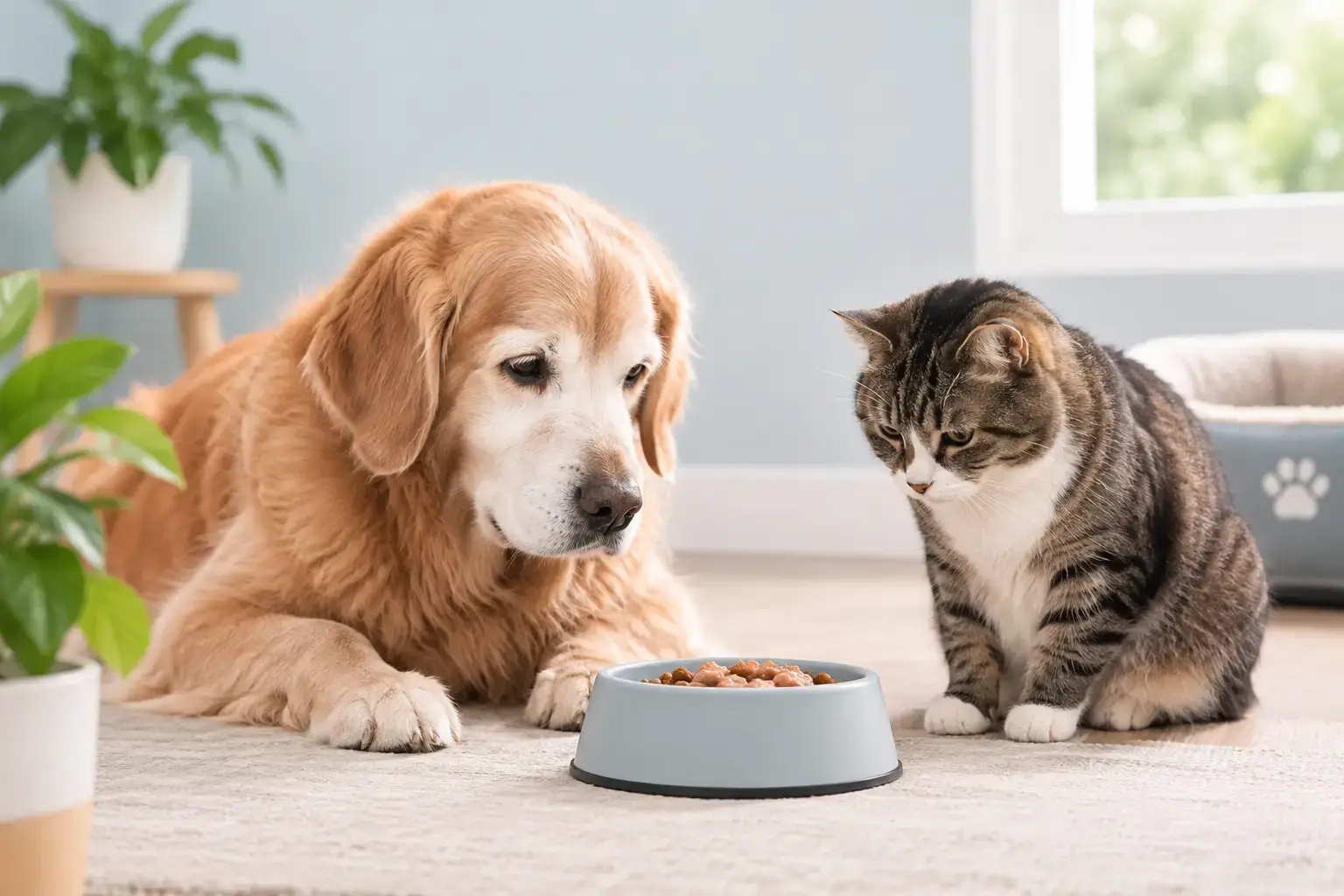
A once-eager dog walking away from their bowl can feel worrying, particularly when they have always loved mealtimes. Learning how to improve senior dog appetite begins with a simple principle: a reduced appetite is a sign to pay attention to, not a behaviour to dismiss as ‘just old age’. Small, thoughtful changes can make food more appealing, but your companion also deserves timely veterinary support to identify what may be making eating difficult.
Why older dogs may eat less
Ageing can change far more than a dog’s energy levels. Their sense of smell may become less sharp, which matters because aroma is a major part of how dogs decide whether food is appealing. A meal that once seemed exciting may now need more warmth and scent to catch their attention.
Dental discomfort is another common reason. Chewing dry kibble can be unpleasant when teeth are loose, gums are sore or there is an infection below the gumline. Dogs are remarkably good at hiding pain, so a dog that still accepts treats but leaves their usual food should not automatically be assumed to be fussy.
Changes in digestion, mobility, medication, stress and underlying illness can also affect appetite. Arthritis may make it uncomfortable to stand at a bowl. Nausea, constipation, kidney or liver concerns, hormonal conditions and cognitive changes can all alter how a senior dog approaches food. The right response depends on the pattern, their wider health and whether they are maintaining their weight.
When reduced appetite needs urgent veterinary advice
A brief dip in appetite can happen after a change in routine or a mild tummy upset, but a senior dog should be assessed promptly if they refuse food for a day, especially if they are frail or have an existing health condition. Contact your vet sooner if reduced eating comes with any of the following:
- vomiting, diarrhoea or repeated retching
- marked tiredness, weakness or collapse
- pain, drooling, bad breath or difficulty chewing
- drinking much more or less than usual
- weight loss, a swollen abdomen or changes in toileting
Avoid trying to solve a prolonged loss of appetite by repeatedly offering richer treats. This can mask the problem, upset digestion and make it harder for your vet to understand what your dog is eating. Take notes on when the change began, the foods they accept, medication, stools, drinking and any weight change. These details are genuinely useful at an appointment.
How to improve senior dog appetite at home
Once your vet has ruled out or begun treating a medical cause, feeding adjustments can help restore a calmer, more enjoyable routine. Introduce one change at a time, rather than changing food, bowls, timings and treats all in one week. That makes it easier to see what agrees with your companion.
Make food easier to smell and eat
Gently warming wet food to around body temperature can release more aroma. Check it is only warm, never hot, before serving. If your dog eats kibble, try adding warm water and allowing it to soften. This may be especially helpful for dogs with dental sensitivity, although dental disease itself still needs professional care.
Some dogs do better with a moist, complete food or a combination of wet and dry food. Choose a complete diet suited to their life stage and health needs, rather than relying on plain chicken, rice or treats for more than a short, vet-advised period. Home-cooked additions can be tempting, but they do not automatically provide balanced nutrition.
A small amount of a dog-safe, appetising topper can encourage interest, provided it fits their dietary plan. For dogs on a prescription diet or those managing conditions such as pancreatitis, kidney disease or food sensitivities, ask the veterinary team before adding anything. What helps one dog eat may be unsuitable for another.
Offer smaller meals with less pressure
A large serving can be off-putting when appetite is low. Try dividing your dog’s usual daily allowance into three or four smaller meals and offer them at predictable times. Many senior dogs find this easier to manage than two substantial meals.
Give them a quiet place to eat away from household bustle, visiting children or other pets. Standing over the bowl, hand-feeding at every meal or continually swapping foods can unintentionally create pressure. Sit nearby if reassurance helps, then allow your dog time and space.
If mobility is an issue, a stable raised bowl may reduce the need to bend, but the ideal height varies. The bowl should allow a comfortable, natural posture rather than forcing the neck upwards. Non-slip mats can also give older dogs more confidence on smooth kitchen floors.
Protect the routine around mealtimes
A gentle walk, sniff around the garden or a little calm interaction before food can stimulate appetite for some dogs. Keep activity appropriate for their mobility and avoid strenuous exercise straight after eating. Consistent mealtimes also support dogs who are becoming unsettled by cognitive changes.
Be mindful of snacks. Dental chews, training rewards and well-meaning bites from the table all count towards daily calories. If treats are filling your dog up, they may have little interest left in their nutritionally complete meal. Reserve favourite rewards for medication or specific training needs and measure them rather than guessing.
Choosing food for a fussy senior dog
Palatability matters, but it is only one part of a suitable diet. Look for a complete food made with clearly identified animal proteins and designed to provide balanced nutrition. The best texture and recipe will depend on your dog’s preferences, teeth, digestion, activity level and veterinary advice.
A gradual transition is kinder on the digestive system. Mix a little of the new food with the old, increasing the proportion over roughly seven to ten days. Go more slowly for sensitive dogs. If loose stools, vomiting or itching appear, pause and speak to your vet rather than continuing to switch between several options.
Protein can help support lean body condition in older dogs, but individual needs vary considerably. A dog with kidney disease, for example, may need a very specific nutritional approach. This is why a food that has worked well for a healthy senior friend’s dog may not be right for yours.
For pet parents seeking convenient nutrition support, highly palatable formats can make everyday care easier. Soft chews may be more readily accepted than tablets by some dogs, but supplements should complement a balanced diet and veterinary plan, not replace either. Choose products developed for a defined need, with clear feeding guidance and ingredients appropriate for your companion.
Keep an eye on weight, not just the bowl
Appetite can look better than it really is if a dog picks at flavourful extras while leaving most of their main diet. Weigh your companion regularly, ideally on the same scales and at the same time of day. You can also watch for ribs becoming more visible, a loss of muscle over the back legs or spine, and a waist that appears more pronounced.
If your dog is losing weight despite eating, or eating less while staying hungry, arrange a veterinary review. Your vet may recommend an examination of the mouth, blood and urine tests, or a tailored diet plan. Early action can improve comfort as well as helping to protect strength and quality of life.
Your senior dog does not need elaborate meals to feel cared for. A comfortable feeding set-up, food that suits their needs and a prompt check when habits change can make mealtimes feel reassuring again – for both of you.