A dog who has always known the way to their bed may suddenly pause in a doorway, seem unsure in a familiar room or wake the household at night. These moments can be upsetting, particularly when they appear in a companion who has been part of family life for many years. Early signs of dog cognitive decline can be subtle, however, and they do not automatically mean your dog has dementia.
Ageing affects every dog differently. A calm, observant approach gives you the best chance of spotting a meaningful change, ruling out treatable health problems and helping your companion stay comfortable and connected to daily life.
What is canine cognitive decline?
Canine cognitive decline, often referred to by vets as canine cognitive dysfunction or CCD, describes age-related changes in the brain that can affect memory, awareness, sleep and behaviour. It is most often seen in senior dogs, though the age considered senior varies greatly by breed and size. A giant breed may show age-related changes earlier than a small terrier who is still lively well into later life.
The condition is sometimes compared with dementia in people, but every dog’s experience is individual. Changes usually develop gradually. Your dog may have a confusing day followed by several days that feel entirely normal, especially at the beginning.
Normal ageing can include a slower pace, longer naps and less interest in energetic games. Cognitive decline is more likely when changes affect your dog’s ability to navigate familiar places, settle into established routines or interact as they once did.
Early signs of dog cognitive decline
One isolated behaviour is rarely enough to draw conclusions. Look instead for changes that repeat, become more frequent or occur alongside other differences in your dog’s routine.
Disorientation in familiar places
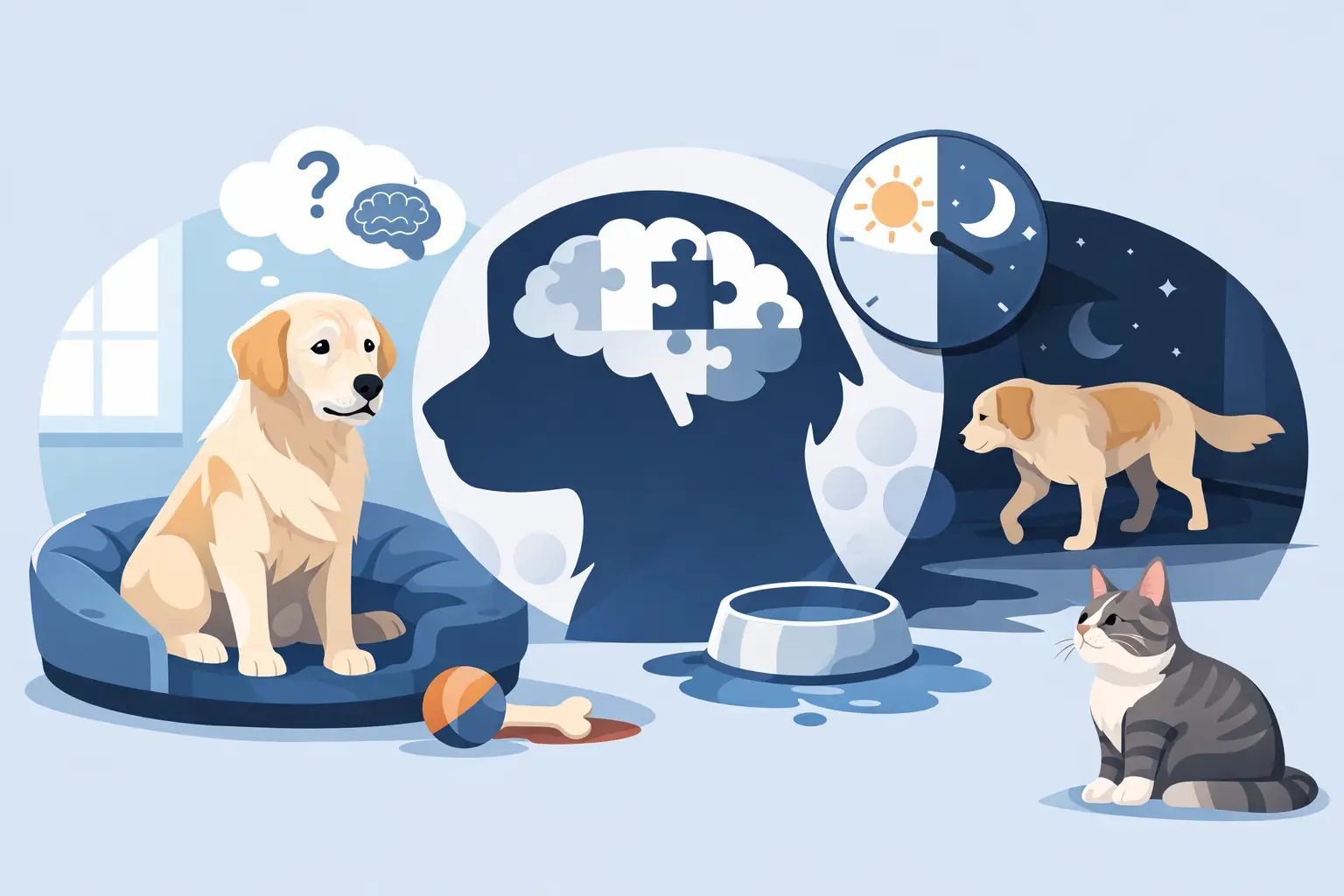
A dog may appear lost in their own home or garden. They might stare at a wall, stand on the wrong side of a door, get caught behind furniture or hesitate at the bottom of the stairs. Some dogs wander without an obvious purpose, while others seem briefly unsure of where their bed, water bowl or favourite person is.
Poor eyesight and hearing loss can look similar, so a veterinary check is essential. A dog with reduced vision may be especially hesitant in dim light, whereas a dog with cognitive changes may seem confused even in a well-known, well-lit room.
A changed sleep pattern
Many older dogs sleep more during the day, but night-time restlessness is worth noting. Your companion may pace after dark, wake and vocalise, ask to go outside repeatedly or seem unable to settle. In some cases, they may sleep heavily through the day and become more active at night.
Pain, needing the toilet more often, anxiety and changes in household routine can also disrupt sleep. The pattern matters more than a single wakeful night.
Different interactions with people or pets
Some dogs become unusually clingy and follow their pet parents from room to room. Others seem withdrawn, greet familiar people less enthusiastically or no longer seek fuss in the same way. A previously sociable dog may appear irritable when approached while resting, particularly if they are startled or uncomfortable.
Avoid assuming this is simply bad behaviour. A dog who cannot hear well, is in pain or feels confused may need more space and gentler handling.
House-training lapses
Indoor accidents in a reliably house-trained dog deserve prompt attention. Cognitive changes can affect routine and awareness, but urinary infections, kidney disease, diabetes, digestive upset, reduced mobility and medication side effects may all be involved. Never punish your dog for an accident. They may be unable to communicate the need to go out, or physically unable to get there in time.
Changes in activity and confidence
You may notice less interest in toys, walks or familiar games. Alternatively, your dog may pace, repeatedly lick surfaces or perform the same movement without settling. They may become uncertain around thresholds, shiny floors, steps or furniture they once navigated easily.
A slower walk is not always cognitive decline. Arthritis and other mobility concerns are common in older dogs, and discomfort can make a companion seem quieter, less patient or reluctant to join in.
Why a veterinary appointment matters
Behavioural change is a health clue, not a diagnosis. Conditions affecting sight, hearing, hormones, the urinary system, joints, teeth or brain can all cause signs that resemble cognitive decline. Pain is particularly easy to miss, as many dogs continue eating and greeting their families despite considerable discomfort.
Arrange a non-urgent veterinary appointment if you see a repeated change in your dog’s behaviour, sleep, toileting or awareness. Take notes beforehand: when you first noticed the change, how often it occurs, what happens immediately before it and whether anything seems to help. Short videos can be useful if your dog is pacing, appearing disorientated or vocalising at night.
Your vet may discuss your dog’s history, perform a physical examination and recommend tests to investigate other causes. If cognitive decline is suspected, they can talk through management options suited to your dog’s age, health and day-to-day needs.
Seek urgent veterinary advice if confusion starts suddenly, your dog collapses, has a seizure, cannot walk normally, seems in severe pain, has difficulty breathing or is not eating and drinking as usual. Sudden disorientation is not something to watch and wait on.
Practical support at home
Once medical causes have been assessed, small changes at home can make a genuine difference. The aim is not to overload your dog with activity, but to make daily life predictable, safe and reassuring.
Keep meals, walks, toileting and bedtime on a consistent schedule. Dogs with reduced confidence often benefit from knowing what comes next. If they struggle after dark, leave a soft light on near their bed and keep routes to water and the garden clear. Non-slip rugs can help a dog who is uncertain on smooth flooring, while ramps or steps may make favourite resting places easier to reach.
Try not to rearrange furniture unnecessarily. Familiar scents, beds and resting areas provide useful cues. If your dog becomes stuck behind a chair or confused at a doorway, calmly guide them out rather than calling repeatedly from across the room.
Gentle mental enrichment can still be valuable, provided it remains enjoyable. A slow sniffing walk, an easy food puzzle or a familiar scent game may offer stimulation without frustration. Choose activities that match your companion’s mobility, vision and attention span. If they disengage or become anxious, make the task simpler or stop.
Nutrition is also worth discussing with your vet. A complete, age-appropriate diet remains the foundation. Depending on your dog’s individual health, your vet may feel that a targeted nutritional supplement is appropriate. The best option is one developed for a clear purpose, given at the recommended amount and accepted willingly by your dog. Palatable formats such as soft chews can make a daily routine easier for pet parents, but they should complement veterinary guidance rather than replace it.
Track the small changes
A simple weekly record can make patterns clearer than relying on memory alone. Note sleep disruption, accidents, pacing, confusion, appetite, interest in walks and changes in social behaviour. Include good days too. This gives your vet a more accurate picture and helps you see whether home adjustments are improving your dog’s comfort.
Be patient with your companion and with yourself. Supporting an older dog is often about noticing what helps them feel secure: a familiar voice, an unhurried walk, a clear path to bed and the comfort of their family nearby.