A cat can spot a hidden tablet with remarkable precision, even in their favourite food. That does not mean you have failed, or that your companion is being difficult. When learning how to give tablets to cats, the aim is to make the experience calm, safe and as low-stress as possible for both of you.
The best method depends on the tablet, the reason it is being given and your cat’s individual preferences. A confident food-motivated cat may take a tablet disguised in a small treat, while a nervous rescue cat may need a slower approach and a little help from the veterinary team. Patience matters more than speed.
Start with the tablet instructions
Before trying to hide, split or crush anything, check the instructions supplied by your vet or on the product label. Some tablets must be given whole because crushing can affect how they work, make them taste very bitter or alter their protective coating. Others may be safely split, but only when a veterinary professional or manufacturer has confirmed this.
Ask your vet or pharmacist whether the tablet can be given with food, whether it needs to be given at a particular time, and what to do if your cat spits it out or vomits afterwards. This is especially important for prescribed medicines. Never substitute a human medicine or change the dose without veterinary advice.
Have everything ready before you call your cat over: the tablet, a small food reward if appropriate, a towel, and fresh water. Keeping the process brief reduces the chance that your cat will become suspicious or anxious.
Try food first, but keep the portion small
For many cats, the gentlest way to give a tablet is to conceal it in a very small amount of something especially appealing. Use just enough food to cover the tablet – not a full meal. If your cat refuses it, you do not want to lose the dose at the bottom of a bowl or make their regular food less appealing.
A pea-sized portion of wet food, a little plain cooked chicken, a lickable cat treat or a purpose-made pill treat may work well. Check that any food used is suitable for cats and does not conflict with dietary advice from your vet. Cats on prescription diets, for example, may need a different option.
Some pet parents find the three-treat approach helpful. Offer one tablet-free bite first, then the bite containing the tablet, followed immediately by another tablet-free bite. The quick sequence can encourage a cat to swallow rather than inspect every mouthful. It is not foolproof, though. If your companion starts chewing around the tablet or refuses the second treat, move on rather than repeatedly trying to outsmart them.
Avoid turning every meal into a battle
Hiding tablets in main meals can backfire if your cat detects the taste. They may then avoid a food they previously enjoyed, which is particularly unhelpful for a cat with a delicate appetite. Reserve a special small treat for tablet time instead.
If the medicine has a strong flavour, food may not be realistic. Do not keep increasing the amount of tasty food in the hope that it will mask the tablet. A larger portion simply gives your cat more opportunity to leave the medicine behind.
How to give tablets to cats directly
Direct administration can sound daunting, but it is often quick once you and your cat have practised calmly. If possible, ask your veterinary practice to demonstrate the technique first. A nurse can show you how to position your hands safely and may suggest a pill giver, also called a tablet applicator.
Choose a quiet room and a stable surface. Some cats feel more secure on the floor, while others settle on a table covered with a non-slip towel. Avoid chasing your cat around the house. Instead, choose a time when they are relaxed, perhaps after a nap, and use a gentle, matter-of-fact approach.
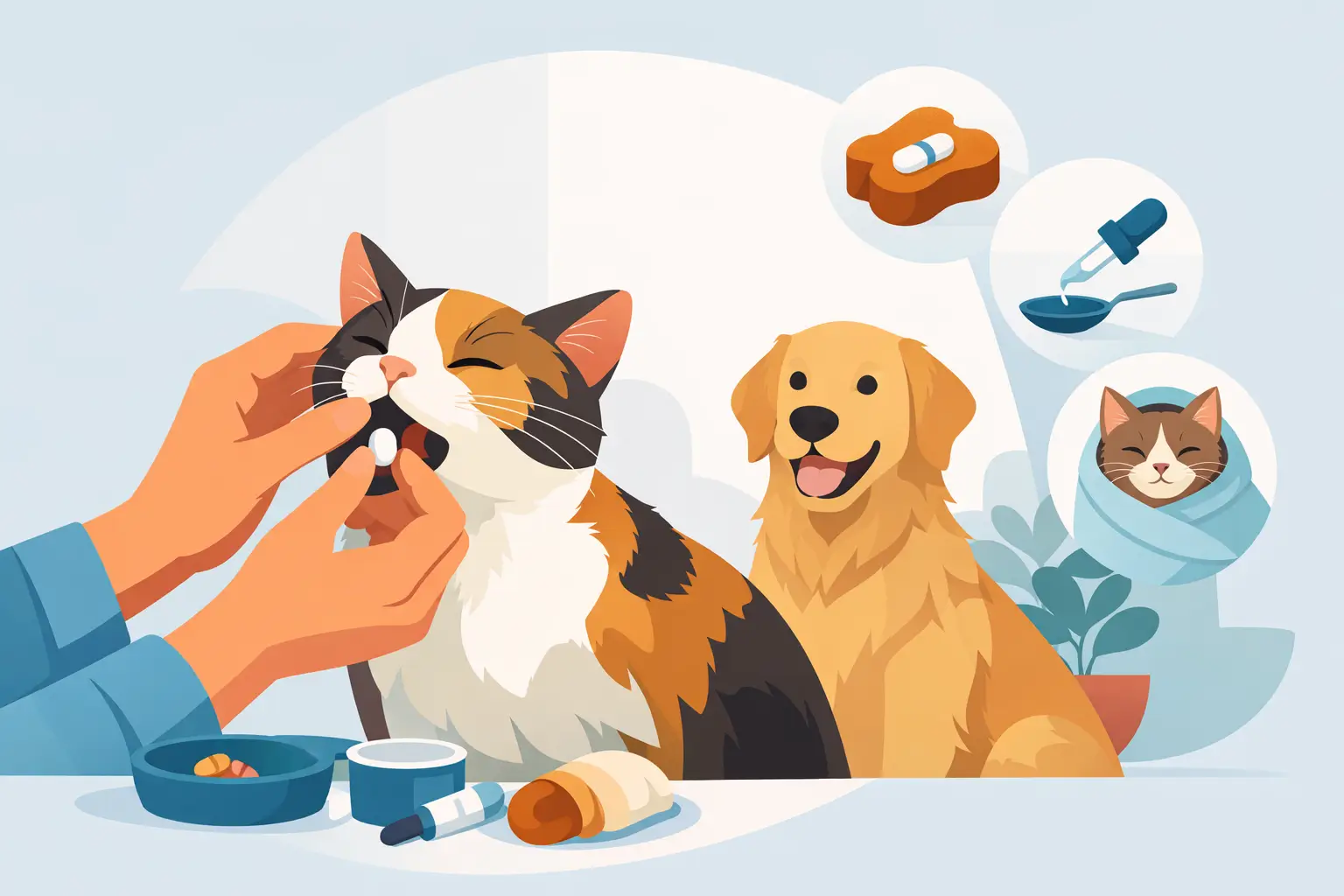
Place one hand over the top of your cat’s head, with your thumb and fingers resting gently behind the canine teeth. Tilt the head slightly upwards – only enough to encourage the mouth to open, not so far that your cat feels restrained or uncomfortable. With the other hand, hold the tablet between your finger and thumb. Use a finger to lower the jaw, place the tablet as far back over the tongue as you can safely reach, then close the mouth.
Keep the mouth gently closed for a moment and stroke the throat or softly blow towards the nose to encourage swallowing. Then offer a small treat, food or water if permitted. Watch your cat for a few minutes. Some cats are expert at holding a tablet in their cheek before depositing it behind the sofa.
Do not put your fingers deep into your cat’s mouth, force their jaw open or continue if they are struggling hard. A bite can be painful, and a distressed cat is less likely to cooperate next time. If you cannot give the dose safely, contact your vet rather than risking injury to either of you.
A pill giver may make the job easier
A pill giver is a simple device that holds the tablet and allows it to be placed towards the back of the tongue without putting your fingers in the mouth. It can be useful for small tablets, cats that dislike hands near their face, or pet parents who are understandably nervous about being bitten.
It still needs a gentle technique. Practise using it with your veterinary nurse if you can, and always check that the tablet has been swallowed. Some pill givers can be used with a small amount of water, but only follow this approach when your vet has advised it for that specific medicine.
Use a towel only as calm support
A soft towel wrap can limit scrambling and protect everyone from accidental scratches. Lay the towel flat, place your cat in the centre, and fold it around their body snugly enough to keep the front legs contained while leaving the head free. Speak quietly and complete the task promptly.
The towel should never be used to overpower a frightened cat. If your companion is panting, vocalising intensely, twisting forcefully or becoming increasingly panicked, stop. Stress can damage trust and make future care more difficult. Your veterinary practice may be able to offer an alternative formulation, such as a liquid, flavoured preparation, capsule or injection, depending on the treatment.
Make tablet time easier over time
Not every tablet is medicine. Supplements can also support defined everyday needs, from digestive comfort to mobility or general wellbeing, but they should still be given according to the label and chosen for your cat’s circumstances. Palatability is valuable here: an easy-to-accept format can turn daily care into a familiar routine rather than a daily negotiation.
Where suitable, a highly palatable chew or powder may be easier for some cats than a tablet. PetExx develops practical formats with acceptance in mind, helping pet parents choose a condition-led option that suits both their companion’s needs and their usual feeding routine. For any ongoing health concern, especially if your cat is older, on medication or has a diagnosed condition, seek veterinary guidance before adding a supplement.
Build positive associations where you can. Keep handling sessions short and reward calm behaviour even when no tablet is involved. Briefly touch your cat’s cheeks, lift the lip for a second, then offer praise or a treat. Over several days, this can make mouth handling feel less surprising.
Consistency helps too. Giving an approved daily tablet at roughly the same time and in the same peaceful place can make the routine more predictable. However, do not become so predictable that your cat vanishes the moment you reach for the cupboard. Follow a dose with something pleasant, then let them return to normal life.
When to contact your vet
Call your veterinary practice if your cat repeatedly refuses a prescribed tablet, you are unsure whether a dose was swallowed, or you miss a dose. Do not give an extra tablet to compensate unless the vet tells you to. Advice varies by medicine, so the safest next step is always specific guidance.
Seek prompt veterinary advice if your cat drools excessively for a prolonged period, coughs, seems to have difficulty breathing, vomits repeatedly, becomes very lethargic, develops facial swelling, or shows any other worrying change after a medication. A little foaming or drooling can occur after a bitter taste, but it is still worth mentioning if it is severe or persistent.
There is no prize for doing tablet time alone. A veterinary nurse demonstration, a different formulation or a more palatable option can transform a difficult daily task into manageable care. The kindest approach is the one that protects your cat’s comfort while ensuring they receive the support they need.