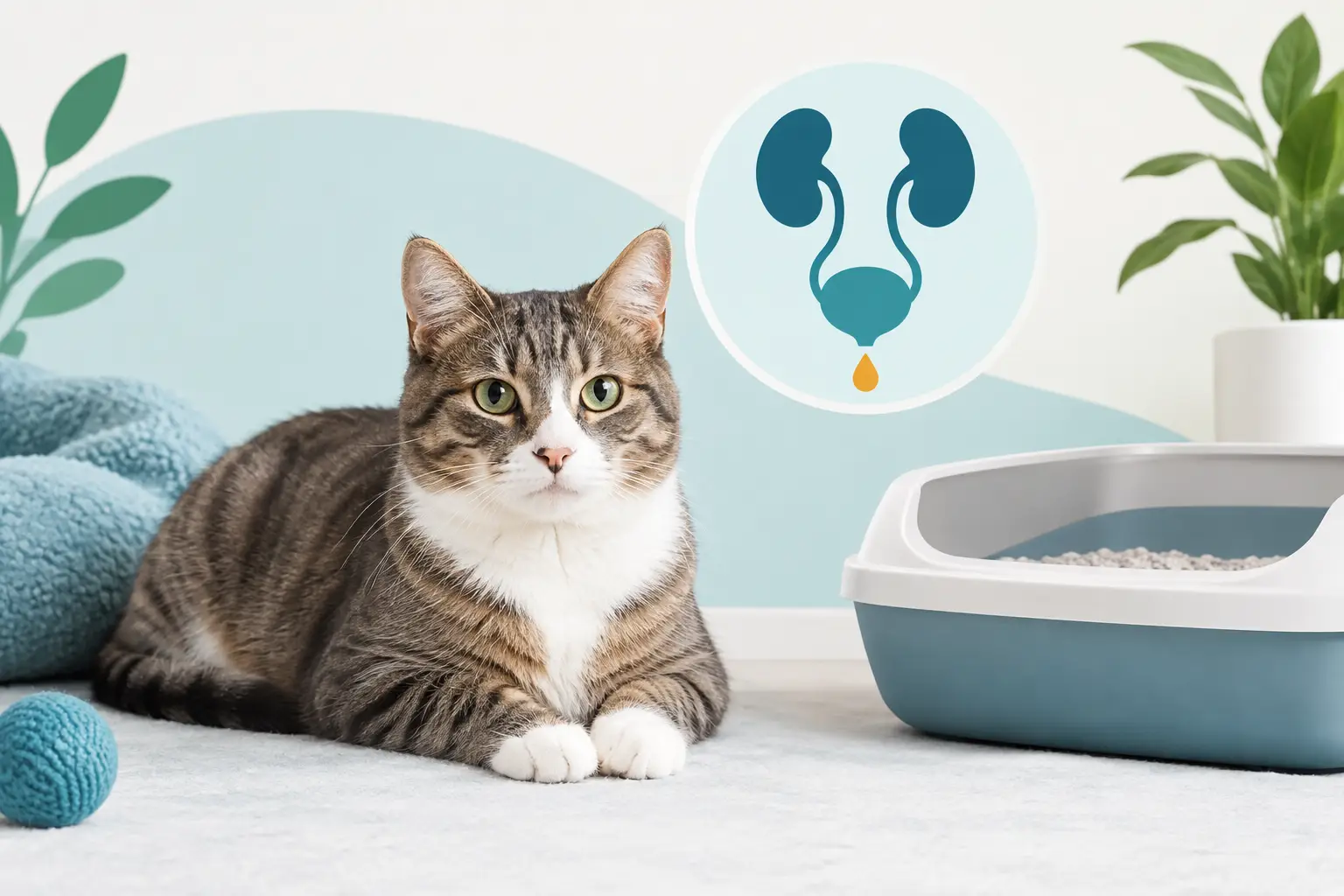
A cat who keeps returning to the litter tray, passes only a few drops of urine or suddenly wees beside the tray is not being difficult. These changes can be early signs of discomfort, stress or a urinary problem that needs veterinary attention. This cat urinary health guide is designed to help pet parents notice what is normal for their companion, make sensible everyday choices and act quickly when something is not right.
Urinary concerns are common in cats, but they are not all the same. Some are mild and manageable with veterinary advice, while a urinary blockage can become life-threatening in a short time. Calm observation, rather than guesswork, gives your vet the clearest picture and gives your cat the best chance of feeling comfortable again.
What healthy urination usually looks like
Most adult cats urinate several times a day, though the exact pattern varies with their diet, water intake, age and activity. A healthy cat will generally use the litter tray without straining, produce a reasonable amount of pale yellow urine and leave the tray without lingering, crying or repeatedly returning.
The most useful thing you can do is learn your own cat’s routine. This is particularly helpful in multi-cat homes, where a change can be easier to miss. Scooping trays daily is not just good hygiene – it lets you notice smaller clumps, unusually large clumps, blood-tinged litter or changes in frequency.
Cats are skilled at hiding pain. A companion who seems quieter, less affectionate or reluctant to jump may be uncomfortable even if you have not seen an obvious problem in the tray. Behaviour and toileting habits should always be considered together.
Cat urinary health guide: signs not to ignore
A urinary problem can involve the bladder, urethra or, less commonly, the kidneys. Feline lower urinary tract disease is an umbrella term vets use for several conditions that can cause similar signs, including inflammation, crystals, stones and infection. Stress-related bladder inflammation is also seen in cats, especially where there have been changes at home.
Contact your vet promptly if you notice repeated visits to the litter tray, straining to urinate, vocalising while trying to wee, urine outside the tray, excessive licking around the back end, blood in the urine or a marked change in thirst. Do not assume a cat is constipated simply because they are straining. The two can look similar, and a vet needs to establish which problem is present.
When it is an emergency
If your cat is trying to urinate but producing little or no urine, seek emergency veterinary help immediately. This is especially urgent for male cats, whose narrower urethra makes them more vulnerable to blockage. Other worrying signs include vomiting, collapse, severe lethargy, a painful or swollen abdomen, or hiding and refusing food.
A blocked cat cannot be safely treated at home with extra water, supplements or a wait-and-see approach. Prompt veterinary treatment is essential. If you are unsure whether your companion has passed urine, it is safer to call your vet or out-of-hours service for advice straight away.
Supporting urinary wellbeing at home
Daily habits cannot prevent every urinary condition, but they can support normal bladder function and reduce some common pressures on your cat. Hydration is one of the most practical places to start. Cats evolved to get much of their moisture from food and may not always drink enough from a bowl alone.
Wet food can help increase total fluid intake for many cats. If your cat eats dry food, speak to your vet before making a major diet change, particularly if they have had crystals, stones or a prescribed urinary diet. The right food depends on the diagnosis. A diet recommended for one type of crystal may not suit another, so general internet advice is not a replacement for veterinary guidance.
Fresh water should be easy to find in several quiet places around the home. Some cats prefer wide ceramic or glass bowls, while others drink more from a pet fountain. Keep water away from litter trays and, where possible, separate it from food. Cats can be particular about these details, and small changes can make a real difference to how often they drink.
A clean, appealing tray also matters. As a useful starting point, provide one tray per cat plus one extra, in calm and accessible locations. Choose a litter your cat accepts, scoop at least daily and avoid suddenly changing the tray, litter or placement unless necessary. An older cat, or one with mobility discomfort, may appreciate a low-sided tray that is easier to enter.
Stress and the bladder connection
Cats often value predictability more than we realise. Building work, visitors, a new baby, a new pet, tension between household cats or even a changed feeding schedule can affect a sensitive companion. In some cats, stress is closely associated with bladder inflammation and urinary signs.
This does not mean the symptoms are ‘all in their head’, nor does it mean you should delay a vet visit. It means that treatment and prevention may need to include both medical care and a gentler home environment. Give each cat access to their own key resources, including food, water, resting spots, scratching areas and trays. Vertical spaces, hiding places and short, regular play sessions can help cats feel more secure.
If there is conflict between cats, it may be subtle. Blocking access to a hallway, staring, following or claiming the best resting place can be enough to create ongoing pressure. Watching the household from your cat’s point of view is often more revealing than waiting for a fight.
Food, supplements and veterinary plans
When urinary signs occur, a vet may recommend urine testing, blood tests, imaging or a specific therapeutic food. These steps help identify what is actually happening rather than treating every case as the same. Antibiotics, for example, are not appropriate for every cat with urinary discomfort because bacterial infections are less common in younger adult cats than many pet parents expect.
A professionally formulated urinary supplement may be a useful addition for some cats, but it should support – not replace – a veterinary plan. Look for products developed for a clearly defined need, with ingredients and feeding guidance that are easy to understand. Palatability matters too: even a carefully selected supplement cannot help if your cat refuses it. Soft chews, powders or pastes may suit different personalities and feeding routines.
Always tell your vet about any supplement, treat or food you give, particularly if your cat is on a prescription diet or medication. This is not about limiting your options. It helps your veterinary team make safe, joined-up recommendations for your companion.
Keeping useful notes for your vet
A short record can make a consultation far more productive. Note when signs began, how often your cat visits the tray, whether they produce urine, changes in appetite or drinking, any stressful events and the food or supplements currently offered. A photo of unusual litter clumps can also be helpful.
Do not try to collect a urine sample unless your vet has explained how and your cat will tolerate it without stress. If a sample is requested, your practice can advise on the cleanest and most useful method. Never press on your cat’s abdomen in an attempt to check or empty their bladder.
A calmer way to care for your cat’s bladder
Urinary health is rarely about one perfect bowl, food or routine. It is about recognising your companion’s normal pattern, providing water and a peaceful toileting environment, and getting professional help as soon as that pattern changes. Your careful attention is not overreacting – it is one of the kindest, most practical ways to protect a cat who cannot tell you where it hurts.