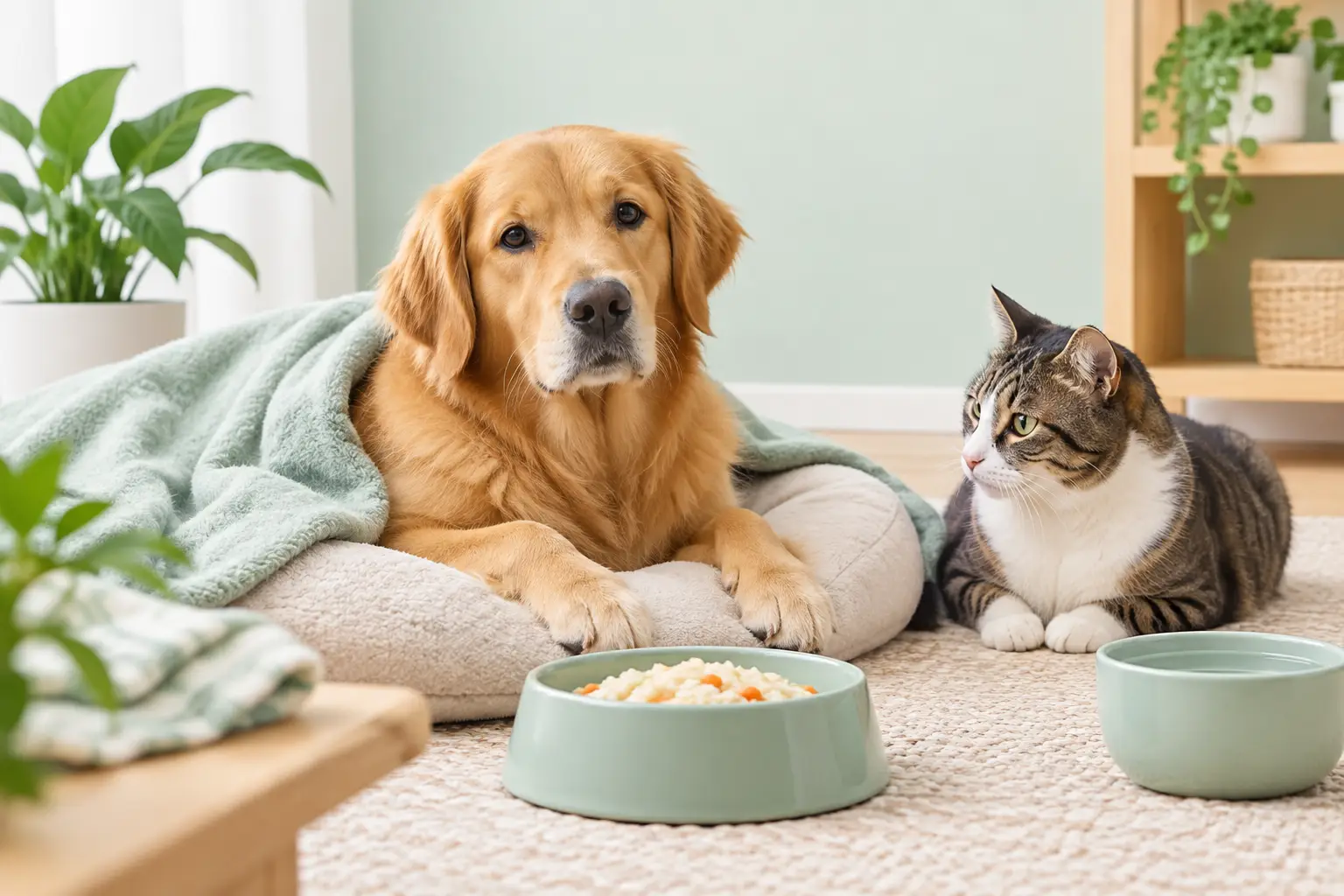
A search for “settle dog stomach” often comes after an unpleasant night, a refused breakfast or an urgent dash into the garden. Mild digestive upsets are common, particularly in curious dogs, sensitive breeds and companions whose routine has changed. The kindest response is usually calm observation and simple care, while knowing when an upset stomach needs veterinary attention.
Start by checking how your dog seems overall
A single soft stool or brief bout of wind in a dog who is still bright, comfortable and interested in water may settle with gentle management. Your companion’s general behaviour matters as much as what is in the bowl. Are they alert, willing to move around and responding to you as normal? Or do they seem painful, unusually quiet or unable to settle?
Think back over the previous day or two. A new treat, rich leftovers, a scavenged item on a walk, stress, travel, a sudden food change or a course of medication can all affect digestion. Keeping a short note of meals, treats, stools and symptoms can reveal a pattern, especially if your dog has recurring tummy troubles.
Do not assume that every upset is caused by food. Vomiting and diarrhoea can also be linked to infection, parasites, pancreatitis, swallowed objects and other conditions that need professional care. Home support is for a mild, short-lived upset in an otherwise well adult dog, not a substitute for a veterinary diagnosis.
How to settle a dog’s stomach gently
The immediate priorities are hydration, rest and avoiding further dietary surprises. Offer fresh water little and often. Some dogs gulp a full bowl after being sick, which can trigger more vomiting, so smaller frequent drinks can be easier to manage. If your dog will not drink, or cannot keep water down, contact your vet promptly.
For an adult dog who has had a mild upset but is otherwise well, it can help to pause treats, chews, table scraps and rich foods. If they are keeping water down and show interest in food, offer a small portion of a simple, highly digestible meal recommended by your vet. A veterinary gastrointestinal diet is often the most balanced option. Avoid making frequent homemade diet changes without advice, as nutritional balance and portion size still matter.
Smaller meals spread through the day are generally gentler than one large serving. If your dog improves, transition gradually back to their usual complete food over several days. Rushing back to normal portions, or adding lots of tempting extras because they seem hungry, is a common reason for symptoms to return.
Fasting advice can vary. It may be appropriate in some cases for a healthy adult dog under veterinary guidance, but it is not suitable for every companion. Puppies, tiny dogs, senior dogs, dogs with diabetes and dogs with medical conditions can become unwell more quickly. Always ask your vet before withholding food, particularly if vomiting is involved.
Support the gut without overcomplicating it
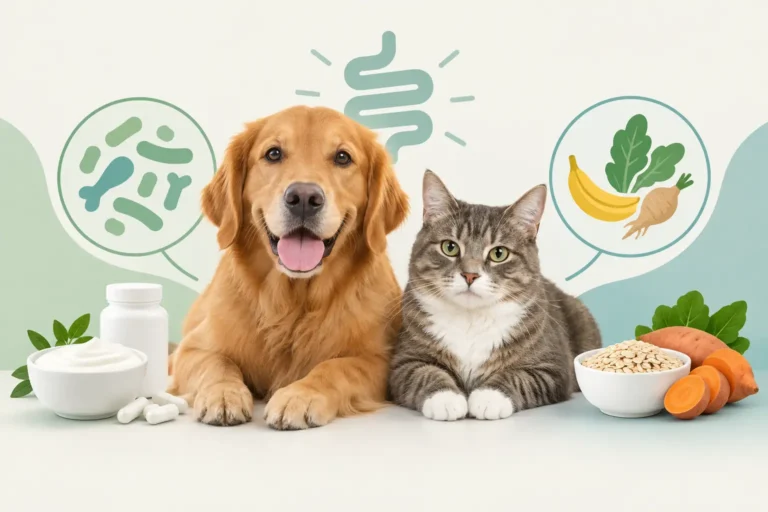
Once your dog is comfortable and eating again, a carefully chosen digestive supplement may help support normal gut function, particularly for companions with occasional sensitivity. Look for a product designed for dogs, with clear feeding instructions and ingredients that suit your pet’s age, size and needs. Probiotics, prebiotics and certain fibres are often used in canine digestive products, but the right choice depends on the issue and your dog’s individual history.
Introduce only one new product at a time. This makes it easier to judge tolerance and avoids turning an already sensitive stomach into a complicated guessing game. Palatability matters too: a supplement your dog willingly accepts, such as a well-formulated soft chew or powder mixed into an appropriate meal, is more likely to become a consistent part of their routine.
PetExx develops condition-specific nutritional support with practicality in mind, but a supplement should complement sensible feeding and veterinary advice, not replace either. If your dog takes prescribed medicine or has an existing health condition, check with your vet before adding any supplement.
Never offer human anti-sickness, anti-diarrhoea or pain medicines unless your vet has specifically prescribed them for your dog. Several common household medicines can be dangerous for pets, even in small doses.
When an upset stomach needs a vet
It is better to make an early call than wait and worry. Contact a vet urgently if you notice any of the following:
- Repeated vomiting, persistent diarrhoea or an inability to keep water down.
- Blood in vomit or stools, black tar-like stools, or a swollen, hard or painful abdomen.
- Marked tiredness, collapse, shaking, weakness, confusion or signs of severe discomfort.
- Possible ingestion of a toxin, medication, bone, toy, fabric, string or other foreign object.
- Any digestive upset in a puppy, very small dog, senior dog, pregnant dog, or a dog with a known medical condition.
A dog that is trying to vomit repeatedly but brings little or nothing up needs emergency veterinary attention, especially if their abdomen looks distended. Equally, do not wait on diarrhoea that continues beyond a day or two, keeps returning, or is accompanied by weight loss, reduced appetite or changes in thirst.
If you can, take a photograph of unusual stool or vomit and make a note of when signs began, what your dog has eaten and any possible access to rubbish or toxins. These details can help your veterinary team assess the situation more efficiently.
Reduce the chance of another flare-up
For dogs with sensitive digestion, consistency is often more valuable than constantly trying new foods. Feed a complete diet that suits their life stage, measure portions accurately and make changes gradually over around a week, unless your vet advises otherwise. Sudden swaps between foods, frequent rich treats and generous portions of human food can all put pressure on a delicate digestive system.
Routine also matters. Some companions develop loose stools during boarding, fireworks, visitors, car travel or changes at home. If stress appears to be a trigger, plan ahead with familiar meals, regular walks, quiet rest periods and advice from your vet or a qualified behaviour professional where needed.
Scavenging is another frequent culprit. Practise a reliable “leave it” cue, supervise walks in high-risk areas and keep food waste, compost and household medicines securely out of reach. A determined dog can find trouble surprisingly quickly.
For recurring episodes, ask your vet about a structured approach rather than repeatedly treating each flare-up at home. They may suggest faecal testing, a diet trial, blood tests or a review of parasite control. Identifying the underlying pattern gives your companion a better chance of lasting comfort.
A settled stomach is not just about stopping a messy symptom. It helps your dog feel like themselves again – ready for their meals, walks, play and the ordinary closeness that makes life together so rewarding. When in doubt, trust your knowledge of your companion and seek veterinary advice early.