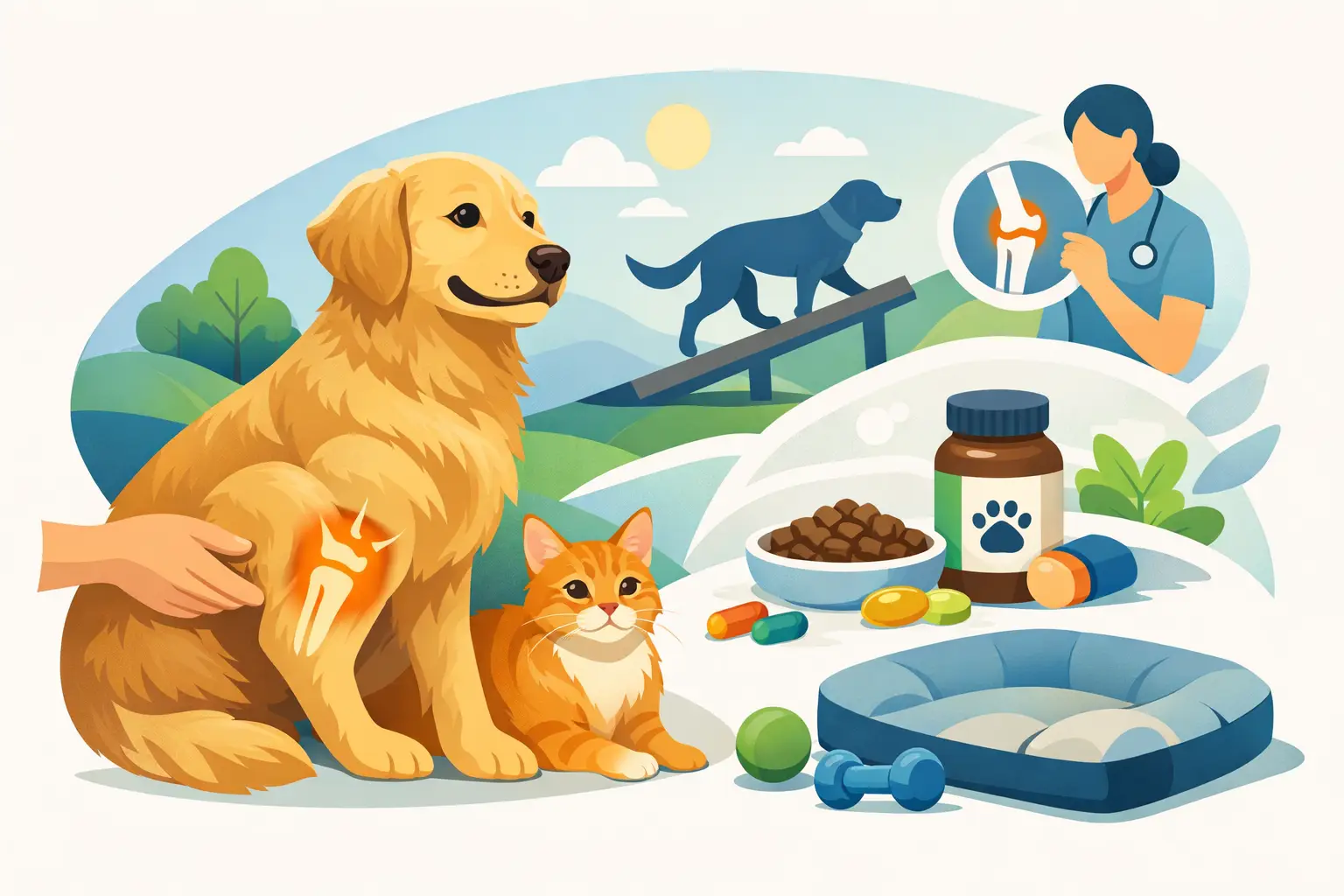
A dog who pauses before climbing the stairs, takes longer to rise from their bed or seems stiff after a nap may be telling you that movement is no longer as comfortable as it once was. If you are asking what helps dog joint stiffness, the kindest answer is usually a combination of veterinary guidance, gentle routine changes, healthy weight management and targeted nutritional support.
Stiffness can affect dogs of any age, although it is especially common in senior companions, large breeds, active working dogs and those with a previous injury. It is easy to put subtle changes down to ageing, but reduced comfort is not something your dog simply has to accept. Small, consistent adjustments can make everyday life easier and help protect their enjoyment of walks, play and time with the family.
What helps dog joint stiffness at home?
Start by observing when the stiffness happens. Some dogs are slow and creaky first thing in the morning, then loosen up after a gentle walk. Others become uncomfortable after a longer outing, a busy day at the park or cold, damp weather. This pattern gives your vet useful information and helps you shape a more suitable daily routine.
Keep a brief note of changes in gait, willingness to exercise, difficulty with stairs, licking at a joint or reluctance to jump into the car. A short video of your companion walking or getting up at home can also be useful, as dogs may move differently in the veterinary practice.
Make rest genuinely restful
A supportive, well-padded bed helps reduce pressure on sore areas, particularly for older dogs who rest for longer periods. Place it somewhere warm and draught-free, with easy access to water and the family rather than in an isolated room. If your dog struggles with slippery flooring, non-slip runners or mats can give them more confidence underfoot.
Ramps can be helpful for cars, steps and favourite furniture, provided your dog is introduced slowly and safely. They are not always the right choice for every home or dog, but reducing repeated jumping may lessen unnecessary strain. Raised bowls can suit some companions, although their use should be discussed with your vet, especially for larger deep-chested breeds.
Choose regular, lower-impact exercise
Too little movement can make joints feel stiffer, while occasional intense exercise can leave a dog uncomfortable afterwards. For many dogs, shorter and more frequent walks are kinder than one long, demanding outing. Choose even ground where possible, allow time to sniff and set a pace your companion can maintain without lagging behind.
Swimming or professionally supervised hydrotherapy can be useful options for some dogs because water supports body weight while allowing controlled movement. However, it depends on the individual dog, their diagnosis and their confidence around water. Do not start a new exercise programme after an injury or sudden onset of stiffness without veterinary advice.
Gentle games at home can keep a dog engaged without repeated twisting, sharp turns or high jumps. Scatter feeding, scent games and calm training sessions work the mind while keeping physical demands manageable. On days when your companion seems more uncomfortable, it is sensible to shorten the walk rather than encourage them to push through.
Weight management can ease pressure on joints
Maintaining a healthy body condition is one of the most practical ways to support mobility. Even a modest amount of excess weight adds load to hips, knees, elbows and paws with every step. In a dog already managing joint changes, that extra pressure can affect comfort and willingness to move.
Ask your vet or veterinary nurse to assess your dog’s body condition rather than relying on the number on the scales alone. Breed, frame and muscle mass all matter. You should usually be able to feel the ribs with light pressure and see a waist when looking from above, but your veterinary team can give guidance tailored to your dog.
If weight loss is recommended, steady progress is safer than drastic food restriction. Measure meals, account for treats and consider swapping some high-calorie rewards for part of the daily food allowance or low-calorie options. Exercise should be adjusted carefully so that it supports fitness without aggravating painful joints.
Can joint supplements help dogs?
A well-chosen joint supplement may be a useful part of a broader mobility plan, particularly when used consistently and alongside a healthy weight and appropriate exercise. Supplements are not a replacement for diagnosis, prescribed pain relief or treatment for an underlying condition. Their role is to provide nutritional support, not to promise a cure.
Ingredients commonly used in dog joint products include glucosamine, chondroitin, omega-3 fatty acids, green-lipped mussel, collagen, turmeric and hyaluronic acid. The evidence and appropriate amount vary by ingredient and formulation, so it is worth choosing a product designed specifically for dogs and developed with sound nutritional input.
Quality matters as much as the ingredient list. Look for clear feeding guidance, suitability for your dog’s size and life stage, and a manufacturer that takes safety and legal requirements seriously. If your dog has a medical condition, is pregnant, takes medication or is on a veterinary diet, ask your vet before introducing a supplement.
The most effective supplement is also one your dog will reliably take. Palatable soft chews can make daily use feel more like a treat than a struggle, while powders may suit dogs who happily finish every meal. PetExx develops condition-led mobility support in practical, palatable formats so pet parents can choose an option that works with their companion’s routine.
Give any new supplement time and use it exactly as directed. Do not combine several joint products without checking the ingredients, as this can lead to unnecessary duplication. If your dog develops digestive upset, itching or any unexpected change after starting a product, stop using it and seek veterinary advice.
When stiffness needs a veterinary appointment
Joint stiffness is not always caused by normal age-related wear. Arthritis is common, but so are strains, ligament injuries, hip or elbow problems, spinal conditions, paw pain and less obvious illnesses. A veterinary examination is the best way to understand what is happening and create a plan for your individual dog.
Arrange an appointment promptly if stiffness lasts more than a few days, is recurring or is affecting normal activities. Your vet may assess movement, joint range, muscle condition and pain, and may recommend imaging or other tests where appropriate. They can also discuss pain management, rehabilitation and safe home adjustments.
Seek urgent veterinary help if your dog cannot bear weight on a leg, cries out in pain, has a swollen or hot joint, suddenly collapses, drags their paws, appears weak in the back legs or becomes unusually quiet and distressed. Sudden severe lameness should not be managed by waiting to see if it improves.
Never give your dog human painkillers unless a vet has specifically prescribed them. Medicines such as ibuprofen and paracetamol can be dangerous for dogs, even at amounts that seem small. Veterinary pain relief is selected and dosed with your companion’s health needs in mind.
Build a routine your dog can enjoy
Mobility care is rarely about one dramatic change. It is about noticing the early signs, keeping your dog lean and comfortably active, making the home easier to navigate and getting professional help when needed. Review your routine as your companion’s needs change: the walk that suited them last year may not be the right length now.
Above all, let your dog set some of the pace. A comfortable companion is more likely to greet the lead with enthusiasm, settle well after exercise and stay involved in the everyday moments that matter. Paying attention to those small signals is one of the most practical forms of care you can give.