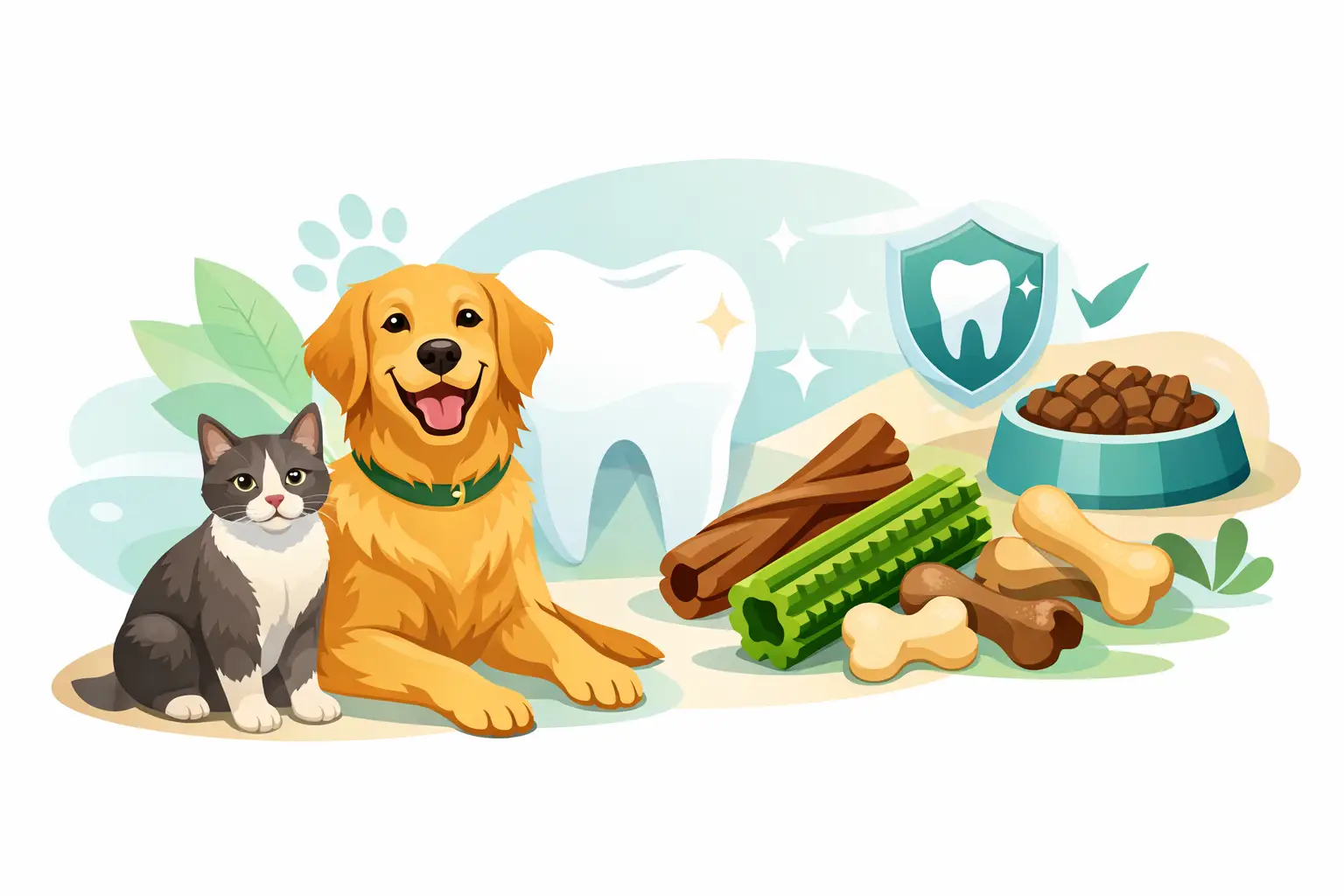
A dental chew can be a welcome part of your dog’s routine, especially when it feels more like a treat than a task. But are dental chews good for dogs in a meaningful dental-health sense? They can be, provided the chew is suitable for your companion, used safely and viewed as support for – not a replacement for – regular tooth brushing and veterinary care.
Dental disease is extremely common in dogs, and it does not only affect older companions. Plaque can begin to build up quickly after eating. If it is not removed, it can harden into tartar, which sits tightly on the tooth surface and can irritate the gums. A daily chew may help reduce fresh plaque, but it cannot remove established tartar below the gumline or treat painful teeth.
Are dental chews good for dogs’ teeth and gums?
The right dental chew works chiefly through chewing. As your dog gnaws, the texture and shape create gentle friction against parts of the tooth surface, helping to disturb plaque before it hardens. Chewing can also encourage saliva production, which is a useful part of the mouth’s natural cleansing process.
That does not mean every chew delivers the same result. A soft, quickly swallowed treat may offer little mechanical cleaning. Equally, a very hard chew can pose risks to teeth. Dental chews are most useful when they have been designed to be chewed for long enough to provide contact with the teeth, without being so tough that they could cause damage.
For many pet parents, the practical benefit matters too. A palatable chew can make an everyday dental routine easier to maintain, particularly for dogs who are still learning to tolerate tooth brushing. Consistency is where potential benefits build over time.
What dental chews can – and cannot – do
A good dental chew may help freshen breath and reduce the amount of plaque accumulating on accessible tooth surfaces. Some are shaped to reach around the teeth, while others include ingredients intended to support oral hygiene. These features can be useful, but the product should be judged as a whole: its size, texture, nutritional profile, feeding guidance and whether your dog can chew it safely.
Dental chews cannot reverse gum disease, repair a broken tooth or remove heavy tartar. Bad breath that persists despite a dental routine is not simply a cosmetic issue. It can be a sign that bacteria and inflammation are already present in the mouth. Bleeding gums, reluctance to eat, pawing at the face, dribbling, dropping food or a sudden dislike of having the muzzle touched all warrant a conversation with your vet.
Professional dental treatment may be needed when tartar or disease has taken hold. Trying to scrape deposits away at home can injure the gums and does not address problems beneath the gumline.
Choosing a dental chew safely
The best option depends on your dog’s age, size, eating habits and current dental condition. A small dog given a large chew may struggle to manage it, while a powerful chewer can break down a product intended for a gentler eater far too quickly. Always follow the pack’s weight guidance and supervise your companion, especially when introducing a new chew.
Avoid anything that is exceptionally hard. A simple rule used by many veterinary teams is that if you cannot make a dent in a chew with your thumbnail, it may be too hard for a dog’s teeth. Antlers, bones, very hard nylon items and similar products can fracture teeth in enthusiastic chewers. A fractured tooth is painful and may require extensive veterinary treatment.
It is also worth looking beyond the dental claim. Check the calories, particularly if your dog is small, less active or managing their weight. One daily chew can make a noticeable difference to a little dog’s energy intake. Choose products with clear feeding instructions and ingredients you are comfortable giving regularly. If your dog has allergies, digestive sensitivity, pancreatitis or needs a prescribed diet, ask your vet before adding any daily treat.
For puppies, senior dogs and dogs with existing dental discomfort, texture is particularly important. Puppies have developing teeth and may not be ready for adult chews. Senior companions may have worn teeth, loose teeth or hidden disease that makes vigorous chewing uncomfortable. A softer, age-appropriate option may be preferable, or your vet may advise focusing on brushing and professional care instead.
Supervision is not optional
Even a chew designed for dogs can become a choking risk if it is swallowed in a large piece. Offer it when you can keep an eye on your companion and remove any small end piece that they may try to gulp down. If your dog tends to guard treats, eats very fast or has previously choked, speak with your vet about safer ways to support oral hygiene.
Brushing remains the gold standard
Chewing reaches some surfaces, but it cannot reliably clean every tooth, particularly the gumline and the inner surfaces of the teeth. Brushing with dog-specific toothpaste remains the most effective at-home way to physically remove plaque.
Human toothpaste is not suitable for dogs. It may contain ingredients that should not be swallowed by them, including xylitol in some products. Use a canine toothpaste and a soft dog toothbrush or finger brush. Start slowly: let your dog taste the toothpaste, touch the brush to a few teeth, then gradually build towards short daily sessions. Calm praise and a reassuring routine can make a real difference.
If daily brushing feels unrealistic at first, do not abandon the effort. Aim for gradual progress. Brushing a few teeth well several times a week is a more helpful starting point than struggling through a stressful full-mouth attempt once a month. A dental chew can sit alongside this training as a positive, familiar part of the routine.
A simple routine that fits real life
The most effective dental care is the one your household can sustain. For a healthy adult dog, that may mean a daily dental chew selected for their size, regular brushing with dog toothpaste and routine vet checks. During annual health appointments, ask your vet to examine the mouth specifically, even if your dog seems comfortable and is eating normally.
Dogs are skilled at carrying on despite mouth pain. By the time they stop eating, dental disease may be advanced. Looking at their teeth and gums regularly can help you spot changes sooner. Lift the lip briefly when your dog is relaxed and look for redness, yellow-brown tartar, swelling, broken teeth or an unpleasant smell that does not settle.
A functional chew can be a convenient addition for pet parents who want an easy, enjoyable way to support daily wellbeing. Palatability matters here: a product only helps if your companion will accept it and chew it appropriately. Still, the best dental decision is never based on convenience alone. It should suit your dog’s individual mouth, diet and behaviour.
If you are unsure where to start, let your companion’s needs lead the choice. A gentle brush today, a suitable chew under supervision and a timely vet check when something seems different can protect far more than a fresh-smelling kiss.