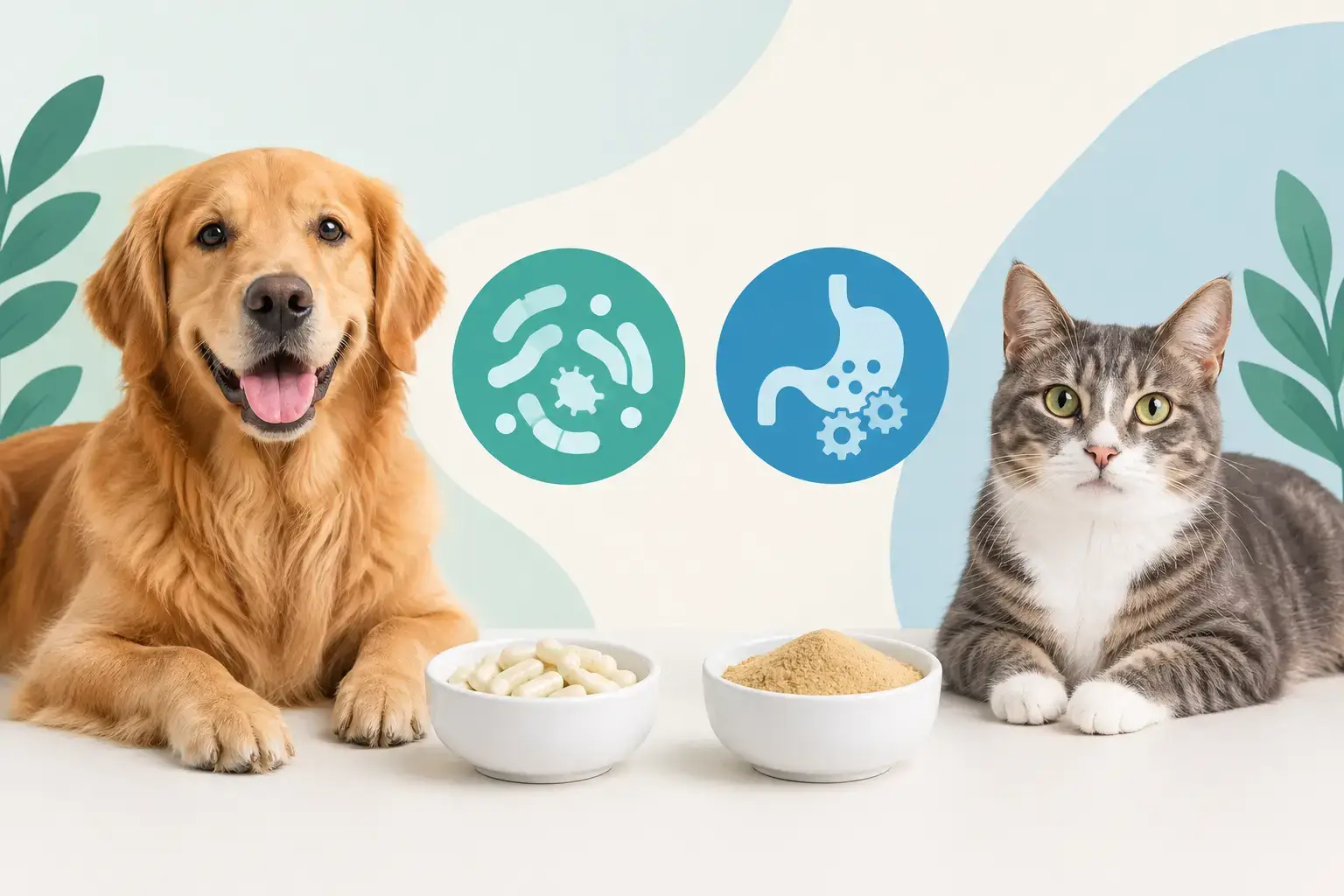
A sensitive stomach can make everyday life uncomfortable for your companion – and confusing for pet parents. You may see soft stools after a change in routine, extra wind, noisy digestion or a pet who seems less enthusiastic about food. When comparing probiotics versus enzymes, it helps to start with one simple point: they support digestion in different ways.
Probiotics are live beneficial microorganisms designed to support the balance of microbes in the gut. Digestive enzymes are proteins that help break food into smaller components your pet can absorb. One works mainly with the gut environment; the other works directly on the food being digested. Neither is automatically “better”. The right choice depends on what your dog or cat needs, how long the issue has been present and what their vet advises.
Probiotics versus enzymes: the key difference
Your pet’s digestive tract contains a large community of microorganisms, often called the gut microbiome. This community has a role in normal digestion, stool quality and the gut’s natural defences. Stress, dietary changes, travelling, illness, antibiotics and changes to daily routine can all affect that balance.
Probiotics provide selected beneficial microorganisms. A carefully formulated pet probiotic may be useful when the aim is to support normal gut balance, particularly during a transition such as changing food or settling into a new home. They are usually given daily for a period of time, rather than expected to transform digestion after one meal.
Enzymes have a more immediate job. They help break down nutrients in food: proteins, fats and carbohydrates. Healthy dogs and cats naturally make digestive enzymes, chiefly through the pancreas and small intestine. Supplementary enzymes may be considered where a pet has difficulty digesting food properly, or where a veterinary professional has identified a specific need.
The distinction matters because a pet with stress-related loose stools may benefit from a different approach than a pet with a diagnosed pancreatic condition. Treating every digestive concern with the same supplement can delay the support your companion really needs.
When probiotics may be a sensible choice
A probiotic is often considered for everyday digestive support where there is a clear trigger but no sign of serious illness. For example, your dog may be adjusting to a new diet, boarding stay or busy household; your cat may be unsettled after visitors, moving home or a change in routine.
Some pet parents also use probiotics as part of a steady wellbeing routine for companions with occasionally sensitive digestion. The goal is not to mask ongoing symptoms, but to support a healthy digestive environment alongside a consistent, suitable diet.
Look for a product made specifically for cats or dogs. The strain or strains used, the amount included and the product’s stability all matter. Live microorganisms need to remain viable through the product’s shelf life and be supplied in an amount appropriate for the intended use. A pet-specific formula also makes dosing simpler and avoids unnecessary ingredients.
It is worth setting realistic expectations. Stool consistency and comfort can take time to settle, especially if diet and routine are also changing. Introduce any new supplement as directed and keep food, treats and feeding times as consistent as possible while you assess the result.
When digestive enzymes may be appropriate
Digestive enzymes are most relevant when food is not being broken down or absorbed as it should be. They may include enzymes such as protease for protein, lipase for fat and amylase for carbohydrates. They are generally mixed with or given alongside meals so they can work on the food your pet eats.
For some conditions, enzyme supplementation is not simply an optional wellbeing choice. Exocrine pancreatic insufficiency, for example, is a condition in which the pancreas does not produce enough digestive enzymes. It can cause weight loss despite a good appetite, frequent or pale stools, excessive hunger and poor coat condition. This requires veterinary diagnosis and an individual care plan, often including prescribed pancreatic enzymes.
Do not try to manage these signs with a general digestive product alone. Persistent diarrhoea, unexplained weight loss, repeated vomiting, reduced appetite, marked tiredness or blood in stools all warrant prompt veterinary advice. Cats can become unwell quickly when they are not eating normally, so it is especially wise not to wait and see.
For a healthy pet, extra enzymes are not always necessary. A complete, balanced food is formulated to provide the nutrients your companion needs, while their body does the work of digestion. Adding several supplements without a clear purpose may make it harder to tell what is helping – or what is causing an unwanted reaction.
Can dogs and cats take probiotics and enzymes together?
They can sometimes be used together because they do different jobs. An enzyme supplement may help with the digestion of a meal, while a probiotic supports the microbial balance within the gut. However, “can” does not always mean “should”.
If your pet has a diagnosed digestive condition, is taking medication, is pregnant, has a weakened immune system or has a history of food sensitivities, ask your vet before combining products. They can help you choose an approach that fits your pet’s age, diet, health history and symptoms.
For an otherwise well pet with mild, occasional digestive sensitivity, start with one change at a time. This is kinder to your companion’s system and far more useful for you. If stools become firmer, wind settles or your pet appears more comfortable, you will have a clearer idea of what supported them.
How to choose the right digestive support
Start with the question PetExx encourages pet parents to ask: what does your pet need? A dog who has loose stools after a kennel stay may have a different need from a senior cat losing weight, even if both are described as having “tummy trouble”.
Consider the pattern. Did symptoms appear after a food switch, antibiotics, stress or scavenging on a walk? Are they occasional or ongoing? Is your companion bright, drinking normally and keen to eat? These practical observations give your vet and nutrition professional much better information than a single label such as “sensitive stomach”.
Choose pet supplements from a brand that states clearly what the product is for, how it should be given and which species it suits. Avoid making sudden, sweeping changes to food and supplements at the same time. Where palatability is a challenge, an easy-to-give format can make a daily routine more manageable, but suitability should always come before convenience.
Diet still sits at the centre of digestive wellbeing. Feed a complete food appropriate for your pet’s life stage, measure portions carefully and introduce new foods gradually. Sudden changes in protein source, rich treats or too many extras can upset even a normally settled stomach. Fresh water, regular exercise for dogs and a calm feeding area can also support comfortable routines.
A few common misunderstandings
Probiotics are not antibiotics. Antibiotics are medicines used under veterinary direction to treat bacterial infections; probiotics contain beneficial microorganisms and are not a replacement for prescribed treatment.
Enzymes are not a cure for every digestive symptom. They have a specific role in breaking down food, and the cause of discomfort may instead be dietary, behavioural, infectious or linked to another health condition.
Finally, natural does not automatically mean suitable for every pet. Safe, legal, thoughtfully formulated products and professional guidance matter, especially for very young, elderly or medically vulnerable companions.
Your companion cannot tell you exactly what feels different, but their appetite, energy, stools and behaviour offer useful clues. Listen to those small changes, make one considered adjustment at a time and seek veterinary help early when something does not feel right.